How to get the year group to take part
“Nobody fills anything in” is the most common problem of any yearbook — and almost always a design problem, not a motivation problem. What actually produces responses.
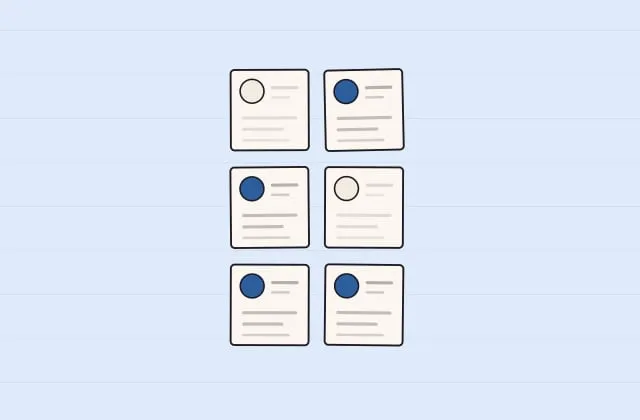
There is exactly one point at which yearbooks genuinely fail, and it isn’t the layout, the money or the printing. It is: 35 of 90 profiles are filled in, and the deadline is in three weeks.
That feels like a motivation problem. It is almost always one of four other problems.
Why people don’t take part
1. They don’t know it’s their turn. The announcement was a message in a chat with 90 members, on a Tuesday, between two memes. Anyone who didn’t read it in the first two hours never read it.
2. They don’t know what exactly to do. “Fill in the yearbook thing” isn’t a task. “Answer 12 questions, takes 5 minutes” is one.
3. It’s too much at once. Profile, three polls, photos, course report, rankings — all opened at the same time. The result isn’t prioritisation, it’s avoidance.
4. There is no deadline. Without a date, a task with no consequence slides backwards forever. That isn’t a character flaw, that’s normal.
All four are solvable, and none of them by asking more often in the chat.
What actually works
Open one thing at a time
Don’t open everything at once. One task, one week, one deadline. Profiles first, then rankings, then photos. The response rate per task rises noticeably, because the task is unambiguous — and the total effort for you falls, because you only have to chase one topic.
In AbiHive you can do exactly that: activate areas individually and set a separate deadline per area. After the deadline the area closes for the year group; the committee still gets in.
Make the deadline visible, don’t announce it
A date in a chat message is invisible after two days. A date that is there every time you open the app works. In AbiHive, the countdown to the handover date runs on everyone’s home screen, and open tasks sit there as “still open”, not as a notification somebody dismissed.
Only remind the stragglers
Reminding everybody is doubly harmful: those who are already finished learn to ignore it, and those who aren’t don’t feel addressed. Remind by name and only the people who are missing.
AbiHive does that automatically: before a deadline a note goes to the people who haven’t entered anything in that area — not to the year group. On top of that there is a weekly personal task overview containing only your own open points.
Say how long it takes
“12 questions, 5 minutes” is the single strongest sentence in the whole communication. People postpone tasks of unknown length. A task with a time attached gets done immediately or not at all — and usually immediately.
Show that something is taking shape
The response rate rises when it becomes visible that this is real. Show two finished profiles. Show the first designed page. Show the interim rankings. An empty form feels like work for nothing; a half-full page feels like a gap you want to close.
That also works in reverse: don’t send progress numbers to the whole year group when they’re bad. “Only 38 % have filled it in” is a disappointment for the 38 % and a permission slip for everybody else.
The three rounds of reminders
Plan for three rounds per task from the start, not one:
| Round | When | Tone | Channel |
|---|---|---|---|
| 1 — Announcement | On opening | What, how long, by when | Chat + app |
| 2 — Reminder | 5 days before the deadline | Only to those missing, by name | App notification |
| 3 — Last call | 1 day before the deadline | Short, concrete, no reproach | Speak to them personally |
Round 3 is the one that makes the difference, and it only works personally. Not in the chat: message them directly. Messaging ten people individually takes fifteen minutes and regularly brings in more than three weeks of chat messages.
Photos are a special case
Photos are the task with the worst response rate, for a simple reason: it has no limit. “Send photos” has no end, so it is never done.
Give it an end:
- A number instead of a request: “three photos of yourself, one from year 7”.
- Tied to an occasion: right after the trip, motto week, sports day — not months later from memory.
- Have them uploaded straight away, not collected. Photos sitting in a chat history are lost to you; photos in the gallery are there.
More in Good leavers’ photos without a photographer.
What doesn’t work
- Applying pressure publicly. It creates defiance, not responses — and with a group that is partly under 18, shaming isn’t an option anyway.
- More and more reminders in the same chat. After the third one nobody reads them.
- Extending deadlines without saying so. Anyone who notices that deadlines are soft treats the next one the same way.
- Filling everything in yourselves. The fastest route to two people making the whole book — and the reason they can’t go on in May.
Takeaways
- One task at a time, with a deadline and a time estimate.
- Remind only those who are missing — automatically, not by group message.
- Plan three rounds, the last one personal.
- Show progress when it’s good; otherwise don’t.
- Photos need a number and an occasion, or none arrive.
How deadlines, reminders and progress work together in the product: features at a glance.
More from Organisation
Schedule for a new year group: one school year, twelve stages
When do you start the yearbook, and what is due when? The process across a whole school year — with the dates that follow backwards from the leavers' ball.

Setting up the committee: who does what
How big does a yearbook committee need to be, which roles do you actually need, and how do you stop two people ending up doing everything? Roles, division, handovers.

Handing over to the next year group
Every year a committee starts from zero — even though the knowledge is already in the building. What to pass on, in what form, and the one hour that saves the next year group weeks.