Leavers' hoodies: sizes, colours, deadlines
How many sizes to offer, which colour always works, and why the order deadline is the most important part. The process from the vote to handing them out.
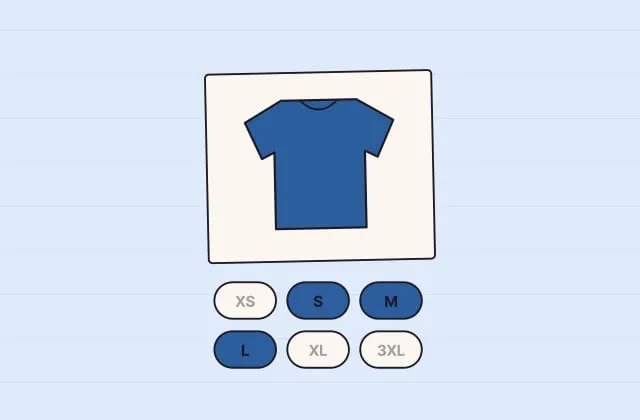
Leavers’ hoodies are the project that brings joy fastest and ends in chaos most reliably. Not because of the printing — that’s the easy part — but because 90 people give you 90 sizes, of which twelve are wrong, seven arrive late and three say “whatever, just pick something”.
The process that prevents that is short.
First: one decision, not five
Settle these in this order, each with a vote, not a discussion:
- Garment: hoodie, sweatshirt, T-shirt or jacket. One.
- Colour: one, two at most.
- Design: motto on the front or the back, name list yes/no.
- Price: what may it cost?
- Deadline: by when does it have to be ordered?
The most common mistake is to be generous here. “You can choose between a hoodie and a T-shirt in four colours” sounds nice and means: eight variants, eight minimum quantities, eight sorting piles when you hand them out — and a noticeably higher unit price, because the run is spread across eight items.
One garment, one colour is the decision that makes everybody happier than it sounds.
Sizes: more choice, less trouble
Be sparing with colours, not with sizes. Sizes cost nothing extra and they are the point where people genuinely become unhappy.
- Offer the whole range, usually XS to 3XL. A single missing size bracket visibly excludes people.
- Say how it fits. “Comes up small, take a size up” saves you twenty questions. That information is in the manufacturer’s product description — pass it on.
- Unisex or a fitted cut is not a detail. If you only offer one cut, make it unisex — it fits everybody somehow; the other way round it doesn’t.
- A try-on sample in M is worth gold. One person orders one in advance, brings it to the year-group meeting, and half the questions disappear.
Important: availability is a question of colour and size. With most suppliers a colour is not available in every size. Check that before you announce the choice — not after.
That is built into AbiHive: the sizes on offer follow the colour chosen, and a combination nobody can deliver is rejected at order time instead of becoming a problem later. On top of that the product photo, colour and price sit right next to the choice, so nobody has to ask what it costs.
The deadline is the whole trick
Merch is the only part of a yearbook project where a missed deadline doesn’t just mean a gap, but a second order — with a new minimum order value, new shipping and a new delivery date.
So:
- One deadline, well before the leavers’ ball. Count production and shipping backwards and add two more weeks of buffer. Printed garments are custom-made; delays are normal, not the exception.
- After the deadline it’s closed. Order again once and you’ve told everyone that deadlines don’t apply for the rest of the year.
- State the consequence in advance. “After the 12th there is no second order” works. “Please order soon” does not.
- Payment happens at ordering, not at handover. An unpaid order is a statement of intent, and otherwise you’re fronting the money.
Check before ordering
- Full size range, cut stated
- Every colour genuinely available in every size offered
- Design at print resolution, not as a screenshot (see Print files)
- Names on the back: spelling checked against the official list
- Price covers the product plus shipping — you forget shipping once, then never again
- All orders paid
- One spare per size beyond what was ordered
That last point sounds like waste and is the cheapest insurance there is: there is always one misprint and always one person who gave the wrong size.
Handing them out
The moment everybody underestimates: 90 items, sorted by size, handed to 90 people, 20 of whom aren’t there.
- Print the list, sorted by name, with size and payment status.
- Have it ticked off while the person is standing in front of you. Not later from memory.
- Pre-sort by size, not by name — the searching is what eats the time.
- Uncollected items go to one person who brings them along for a week. After that, to the office or one fixed pick-up point.
For the list you can export the orders from AbiHive as CSV — one row per person and garment, with size and colour, which is exactly the list the person with the pile needs. Not the aggregated overview: at handover “34 × M” doesn’t help, who gets which one does.
Takeaways
- One garment, one colour. With sizes, the full range instead.
- Availability is colour and size — check beforehand.
- Get a try-on sample in M; it saves half the questions.
- One deadline, with the consequence announced, paid at ordering.
- One spare per size.
- Hand out with a name list, pre-sorted by size.
More: the module Merch.
More from Organisation
Schedule for a new year group: one school year, twelve stages
When do you start the yearbook, and what is due when? The process across a whole school year — with the dates that follow backwards from the leavers' ball.
Setting up the committee: who does what
How big does a yearbook committee need to be, which roles do you actually need, and how do you stop two people ending up doing everything? Roles, division, handovers.
Handing over to the next year group
Every year a committee starts from zero — even though the knowledge is already in the building. What to pass on, in what form, and the one hour that saves the next year group weeks.